
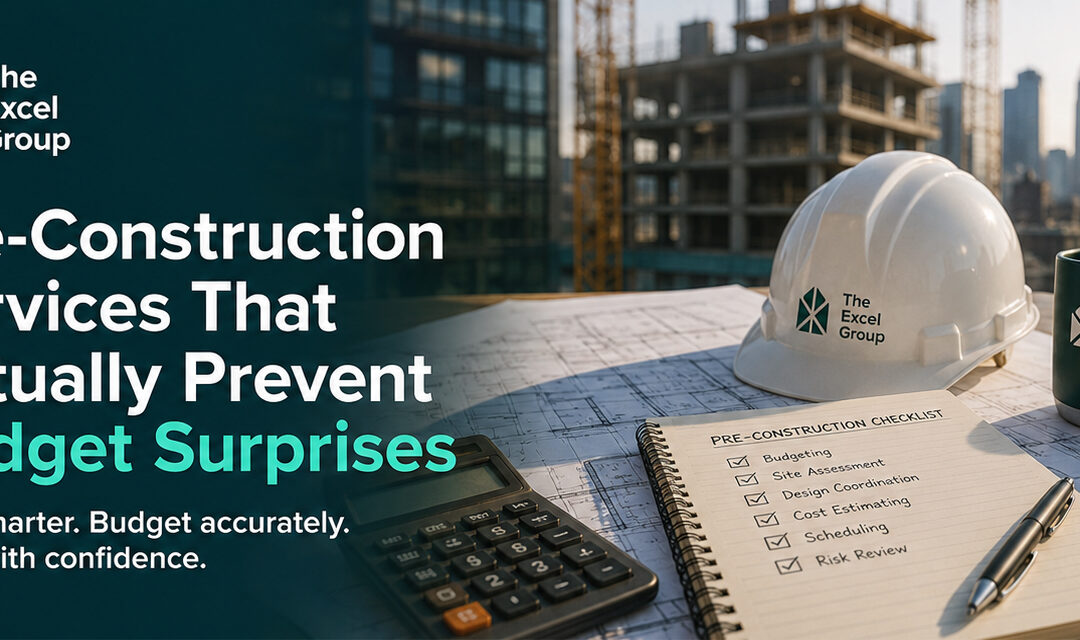
Pre-Construction Services That Actually Prevent Budget Surprises
For owners, developers, and project teams, few things create more frustration than a construction budget that begins shifting before work even starts. Strong pre-construction services in NYC are one of the most effective ways to reduce uncertainty, improve decision-making, and prevent avoidable cost overruns before a project enters execution.
Whether you are planning a commercial build-out, tenant improvement, or phased development project, investing in early planning and coordination can significantly improve financial predictability. Across NYC and East Coast construction markets, the projects that stay on track are typically the ones that prioritize disciplined planning from the beginning.
At The Excel Group, pre-construction is approached as a strategic process designed to align scope, budget, scheduling, and constructability before work begins in the field.
This guide breaks down how effective pre-construction planning helps reduce budget surprises and creates stronger project outcomes from day one.
What Are Pre-Construction Services?
Pre-construction services refer to the planning, analysis, coordination, and budgeting work completed before physical construction begins.
These services typically include:
- Construction budgeting services
- Site assessment and feasibility review
- Scheduling and logistics planning
- Design coordination
- Construction cost estimating NYC
- Procurement strategy
- Risk analysis and constructability review
For many commercial and residential projects, pre-construction serves as the foundation for smoother project delivery and more accurate budgeting.
Why Construction Budgets Often Change Unexpectedly
Budget overruns rarely happen because of a single issue. More often, they result from incomplete planning, unclear scope, or coordination gaps early in the process.
Common causes include:
- Incomplete construction documents
- Unrealistic early budgeting
- Existing site condition surprises
- Scheduling conflicts
- Late-stage design revisions
- Procurement delays
- Lack of coordination between consultants and contractors
Without structured pre-construction planning, these issues often surface after construction begins, when adjustments become significantly more expensive.
Step 1: Establish a Realistic Project Scope
One of the first goals of effective commercial pre-construction services is defining project scope clearly and early.
This includes:
- Understanding owner priorities
- Identifying operational constraints
- Aligning expectations across stakeholders
- Clarifying design intent and deliverables
The clearer the project scope, the more accurate budgeting and scheduling become.
Step 2: Build Accurate Early Budgeting
Accurate budgeting is one of the most valuable components of strong construction budgeting services.
A reliable early budget should account for:
- Material costs
- Labor conditions
- Market pricing fluctuations
- Permitting and compliance requirements
- Existing building conditions
- Scheduling and phasing impacts
Projects that invest in realistic early budgeting are significantly more likely to avoid unexpected cost escalation later in the process.
Step 3: Coordinate Design Before Construction Begins
Many costly project issues originate from gaps between design intent and field execution.
Strong pre-construction planning helps align:
- Architects
- Engineers
- Consultants
- Contractors
- Ownership teams
This coordination process helps identify conflicts before they affect schedule or budget.
Across East Coast construction projects, early coordination consistently improves project predictability and reduces reactive decision-making.
Step 4: Evaluate Site Conditions and Logistics
Every building and site presents unique challenges.
A strong pre-construction process should evaluate:
- Existing conditions
- Building access limitations
- Occupied space constraints
- Delivery logistics
- Utility coordination
- Safety considerations
Understanding these conditions early allows teams to plan around risk rather than reacting to problems after work begins.
Step 5: Create a Clear Construction Planning Process
A structured commercial construction planning process in NYC creates accountability before construction starts.
This process typically includes:
- Budget tracking systems
- Procurement timelines
- Milestone scheduling
- Coordination protocols
- Communication workflows
- Risk management planning
The goal is not simply speed. It is predictability, transparency, and control throughout project delivery.
How Pre-Construction Reduces Budget Surprises
Owners often ask how to avoid construction budget overruns before a project begins.
The answer is rarely a single solution. The most successful projects rely on a combination of:
- Accurate cost estimating
- Early coordination
- Realistic scheduling
- Scope clarity
- Ongoing communication
- Strategic planning
Strong project planning services in NYC help teams make informed decisions earlier, when changes are easier and less costly to manage.
Commercial Applications
The value of pre-construction applies across a wide range of commercial construction projects.
In commercial environments:
- Office build-outs
- Retail construction
- Hospitality projects
- Financial institution interiors
In residential construction:
- Ground-up homes
- Multi-unit developments
- Renovations and additions
- Phased residential projects
Across commercial construction environments, early planning consistently improves budgeting accuracy and project coordination.
Start With a Clear Plan
Successful projects begin long before construction starts.
If you are preparing for a commercial project, investing in structured pre-construction planning can help reduce uncertainty and improve long-term outcomes.
Talk to our team about your project goals, timeline, and budget considerations. You can also request a pre-construction readiness checklist to better understand the planning process before work begins.
REFERENCES:
- Construction Management Association of America (CMAA)
https://www.cmaanet.org - National Institute of Building Sciences
https://www.nibs.org - U.S. General Services Administration (GSA)
https://www.gsa.gov/real-estate/design-construction - OSHA Construction Standards
https://www.osha.gov/construction - Project Management Institute (PMI)
https://www.pmi.org
- Construction Management Association of America (CMAA)